Ghana, the “17th Region,” isn’t just a metaphor. It’s a movement. Since the 2019 Year of Return, hundreds of thousands of Diasporas Africans have visited, invested, and put down roots in Accra, Cape Coast, and beyond. In 2026, the question isn’t whether to return. It’s how long you’re staying.
Why Ghana? Understanding the “17th Region” Concept
The African Union officially designates the global African Diaspora as the “6th Region” of the continent, alongside North, West, Central, East, and Southern Africa. But travel professionals, cultural strategists, and investment advisors have given Ghana an even more specific identity: the 17th Region.
Why 17? Ghana has 16 administrative regions. The 17th is yours, wherever in the world you were born.
It’s a bold idea. And Palace Travel has watched it evolve from a hashtag into a full economic and cultural reality. Since our founding in 1991, with wholly owned offices across West Africa, we’ve had a front-row seat to this transformation. What we’re witnessing in 2026 is unlike any period before.
What Is “Beyond the Return” and Why Does It Still Matter in 2026?
The Year of Return marked 400 years since the first enslaved Africans arrived in the Americas. It drew over a million visitors to Ghana in a single year. “Beyond the Return” was the logical next chapter.
Launched in 2020 and sharpened through 2026, it’s a 10-year national strategy designed to convert visitors into residents, tourists into investors, and travelers into citizens.
The results are concrete. In November 2024, 524 members of the African diaspora were granted Ghanaian citizenship under this program.
Over 1,500 Americans of African descent officially relocated to Ghana between 2019 and 2023. Many of these individuals moved specifically to establish businesses in sectors like technology, real estate, and tourism.
Additionally, the diaspora contributes an average of $3 billion annually in capital to the Ghanaian economy.
This isn’t nostalgia. It’s nation-building.
7 Reasons Ghana Has Become the Diaspora’s Permanent Home
1. Economic Empowerment: The “Beyond the Return” Business Gateway
Ghana’s government has made it more accessible than ever for Diaspora entrepreneurs to register businesses, access land, and participate in the African Continental Free Trade Area (AfCFTA). The Ghana Investment Promotion Centre (GIPC) offers specific Diaspora investment packages in agritech, real estate development, and fintech.
Accra’s tech scene, centered in Dzorwulu and Airport City, is producing startups that compete across the region. If you’re looking at Africa as a business opportunity in 2026, Ghana is almost always the first conversation.
Takeaway: The financial infrastructure for Diaspora investment in Ghana is documented, growing, and ready for you.
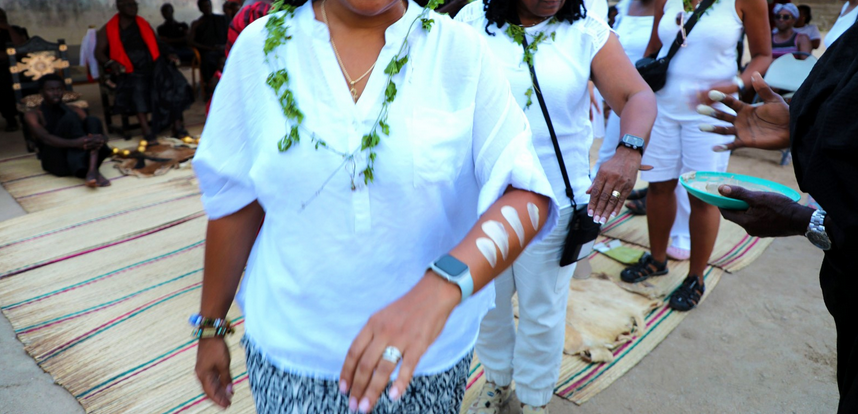
2. Is the “Soul Name” Ceremony Still Happening in 2026?
Yes. And it remains one of the most emotionally charged experiences our clients describe.
The traditional Ghanaian naming ceremony, known in Akan tradition as the “Abadintow” (outdooring), connects your day of birth to an ancestral name: Esi or Akosua (Sunday-born female), Kwame (Saturday-born male), Abena (Tuesday-born female), and so on. For returning Diaspora adults, traveling to traditional villages in the Ashanti or Central Region to receive that name from a chief or village elder is more than a ceremony.
It’s an anchor.
The air in those village courtyards is warm, earthy, and quiet in a way that Accra never is. Time slows down. The elder speaks. You leave carrying a name that belongs to you and to every generation before you.
Palace Travel’s West Africa team based in Accra can arrange naming ceremony experiences as part of a fully bespoke heritage itinerary.
3. The Arts Revolution: Is Accra Now the Cultural Capital of Black Creativity?
Short answer: yes. And the argument gets stronger every year.
AfroFuture the rebranding of Afrochella in 2022, draws global artists, designers, and musicians to Accra each December. The Chale Wote Street Art Festival in James Town transforms Accra’s historic fishing district into an open-air gallery every August. Galleries in Labone and Osu are setting the global conversation in African contemporary art.
The music scene is in its own world. Highlife, Afrobeats, and Afropop artists from Ghana, Nigeria, and across the continent perform in venues ranging from intimate rooms in Osu to the sprawling grounds near the Accra International Conference Centre.
Takeaway: If culture is a core reason for your trip, build your itinerary around the August through December calendar.
4. Dual Citizenship and Residency: How Easy Is It in 2026?
Ghana is one of the most accessible African nations for Diaspora citizenship and right-of-abode, and the process is clearer than most people realize.
The Right of Abode: Under the Ghana Citizenship Act, people of African descent can apply for the Right of Abode, which grants indefinite residency. Applications are processed through the Ghana Immigration Service.
Dual Citizenship: Ghana permits it. If you were born in Ghana or have a Ghanaian parent, you can apply to retain or reclaim citizenship regardless of your current nationality.
The Joseph Project: Launched in 2007, this initiative specifically supports Diaspora Africans through the citizenship and right-of-abode process.
PRO-TIP: Palace Travel Expedited Visa Service for Ghana — 2026 Standard tourist visas for Ghana are typically processed within 7 to 10 business days. Palace Travel’s Expedited Visa Service, managed through our wholly owned Accra office, can fast-track your documentation in as little as 48 to 72 hours.
This service is especially valuable for clients combining Ghana with Senegal, Ivory Coast, or Nigeria on a multi-country West Africa itinerary.
Contact our Visa Desk to get started before you book flights.
5. Eating, Living, and Belonging: What Does Daily Life in Accra Actually Feel Like?
This is the question nearly every first-time visitor asks by day three. “Could I actually live here?”
The honest answer: it depends on your relationship with a city growing faster than its infrastructure. For many returnees, that energy is the appeal, not the obstacle.
Accra’s food landscape stretches from street-side Banku and tilapia at La Beach to rooftop restaurants in Labone serving fusion cuisine with a Ghanaian foundation. You can eat Kelewele (spiced fried plantain with ginger and pepper) from a roadside cart at midnight or sit down to a proper tasting menu in Airport Hills. The range is real.
Neighborhoods matter here. East Legon and Cantonments attract expats and returning Diaspora with reliable infrastructure and international schools. Osu and Labone are the creative and social hubs. Tema, just east of Accra, is where much of the investment-driven residential development is currently concentrated.
Takeaway: Accra is hot, layered, warm, and alive. It rewards those who lean into it.
6. Real Estate and Investment: Where Should the Diaspora Be Putting Its Money?
This is where the conversation gets serious.
The Accra real estate market has matured sharply since 2019. Prices in East Legon and Roman Ridge have moved considerably, making timing increasingly important. But opportunity still exists across different strategies:
- East Legon: Premium residential, strong Diaspora demand, reliable rental yields for short-stay and serviced apartments.
- Tema: Industrial and residential development corridors with long-term capital growth potential.
- Cape Coast and Elmina: Heritage tourism investment. Boutique hotels and Diaspora-targeted guesthouses are underdeveloped relative to visitor demand.
- Brong-Ahafo and the Volta Region: Agricultural land acquisition for Diaspora investors with longer time horizons.
Travelers who entered in 2020 to 2022 saw strong appreciation. Those entering now are working with different strategies.
Talk to the Ghana Investment Promotion Centre (GIPC) advisory team before you commit.
7. The Ancestral Pull: Cape Coast, Elmina, and PANAFEST
No Heritage Investment Tour is complete without time on the Central Region coast.
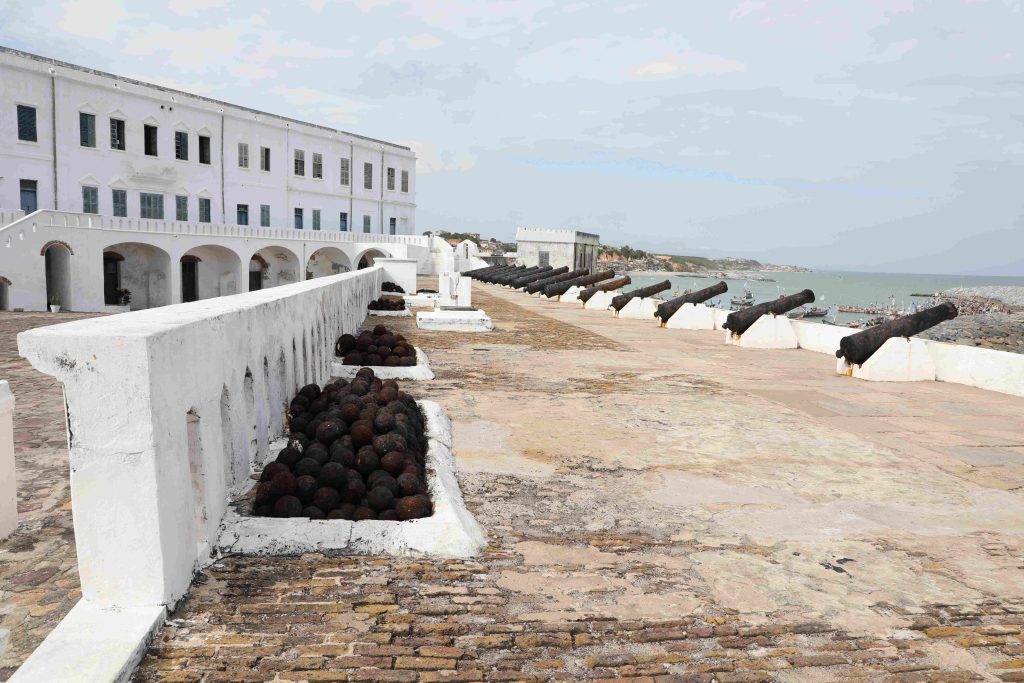
Cape Coast Castle and Elmina Castle are not easy visits. Standing at the Door of No Return, you feel the weight of it physically. The walls are cool, damp, and centuries old. The ocean air pushes through the dungeons with a heaviness that no photograph captures. You stand there and understand why people weep before they’ve said a word.
PANAFEST, the Pan African Historical Theatre Festival, is held every two years in odd-numbered years — 2025, 2027, and beyond — in Cape Coast. It brings together Diaspora Africans, Caribbean delegations, and African scholars for performances, ancestral rites, and panels. The next major edition is scheduled for 2027. Plan ahead if this is a priority for your itinerary.
This, more than the food or the business meetings or the nightlife, is what our clients consistently say changed them. It stays with you.
How Does Ghana Compare to Other Diaspora Destinations in Africa?
Palace Travel operates across the entire continent. That perspective is something a single-country operator simply cannot offer.
Our Senegal tours offer a different texture with Goree Island, a thriving creative economy in Dakar, and strong French-colonial architecture. If you’re weighing both, the itineraries are distinctly different. Ghana is more developed for Diaspora tourism infrastructure.
South Africa offers the Diaspora a different kind of connection: post-apartheid democracy, urban culture in Cape Town and Johannesburg, and a well-developed tourism infrastructure. But for those tracing West African heritage specifically, it’s a separate journey.
Nigeria is Ghana’s obvious regional counterpart: larger, louder, economically dominant, and culturally explosive. But Nigeria’s visa landscape and regional security considerations require more dedicated pre-trip planning.
For the African-American and Caribbean Diaspora specifically, Ghana remains the most direct, accessible, and emotionally resonant entry point into the continent.
Is Ghana the Right Move for You in 2026?
If you’re reading this and feeling the pull, trust it.
It doesn’t matter if you’ve never set foot on African soil or if this is your fifth visit. Ghana in 2026 is a country actively building something for people like you. The government wants you there. The culture welcomes you. The economy needs what you’re bringing.
Palace Travel has been operating in West Africa since 1991. Our team is on the ground. Our offices are wholly-owned and staffed by people who live in the cities you’re visiting. We don’t outsource your experience to third parties and call it local knowledge.
Your 17th Region is waiting.
Frequently Asked Questions
What exactly is the “17th Region” of Ghana?
The “17th Region” refers to the African Diaspora’s symbolic, and increasingly formal, claim to Ghana as a permanent cultural and ancestral homeland. Ghana has 16 official administrative regions. The 17th represents the global African Diaspora, recognized informally through the Beyond the Return initiative and the African Union’s designation of the Diaspora as the “6th Region” of Africa.
Do I need a visa to visit Ghana in 2026?
Most nationalities require a visa to enter Ghana. Citizens of ECOWAS member states, including Nigeria, Senegal, and Ivory Coast, can enter visa-free. U.S., UK, and Canadian passport holders require a visa, obtainable online through the Ghana Immigration Service portal. Palace Travel’s Expedited Visa Service can fast-track processing to 48 to 72 hours through our Accra office.
What are the requirements for the Right of Abode in Ghana?
The Right of Abode (ROA) grants people of African descent in the Diaspora the right to reside permanently in Ghana, enter visa-free, and work without a permit. It is not full citizenship — holders do not receive voting rights or a Ghanaian passport, though ROA is often a stepping stone toward naturalization.
To qualify as a Diaspora applicant, you must generally: have resided in Ghana for a minimum of 7 years; provide proof of African ancestry; demonstrate good character, verified by two Ghanaian referees who are notaries public, lawyers, or senior public officers; show no conviction carrying a prison sentence of 12 months or more; provide evidence of financial means or an independent livelihood; and be lawfully residing in Ghana at the time of application. Applications are submitted to the Minister of the Interior through the Ghana Immigration Service, and approval requires the President of Ghana.
Processing timelines vary. Consult the Ghana Immigration Service or a qualified Ghanaian immigration attorney for current guidance specific to your situation.
When is the best time to visit Ghana for heritage tourism?
July through December is the optimal window. August brings Chale Wote Street Art Festival in James Town. December is AfroFuture and the Homowo Festival season. PANAFEST runs biannually in July in Cape Coast. The dry season from November through March also offers the most comfortable travel weather across the country.
Ready to make the journey?
Plan Your 2026 Ghana Heritage Tour with Palace Travel