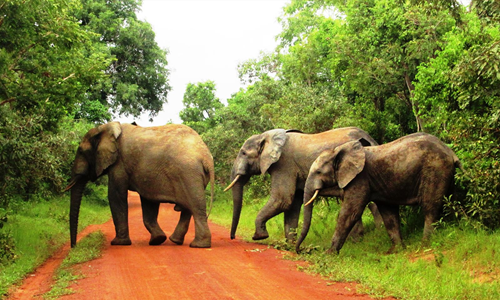
A Mole National Park safari is West Africa’s most underrated wildlife experience. Located in Northern Ghana, Mole covers 4,577 square kilometers and protects the largest elephant population in the country. In 2026, it’s more accessible, better serviced, and more affordable than comparable safari destinations in East or Southern Africa. Here are 5 insider secrets that make all the difference.
Our programs in West Africa are operated by our destination management company (DMC), Continent Tours, with offices in Ghana and Senegal. When you book a Palace Travel safari to Mole National Park, you are backed by a team that lives and works in the region year-round.
Get Your Custom Safari Itinerary | Speak with a West Africa Safari Specialist
Why Is a Mole National Park Safari Ghana’s Best-Kept Wildlife Secret?
Here is the honest answer: most safari travelers still reflexively book East Africa safaris. The Serengeti. Masai Mara. Amboseli. These are extraordinary parks, and Palace Travel books them every week. But the continent has changed, and so has the conversation.
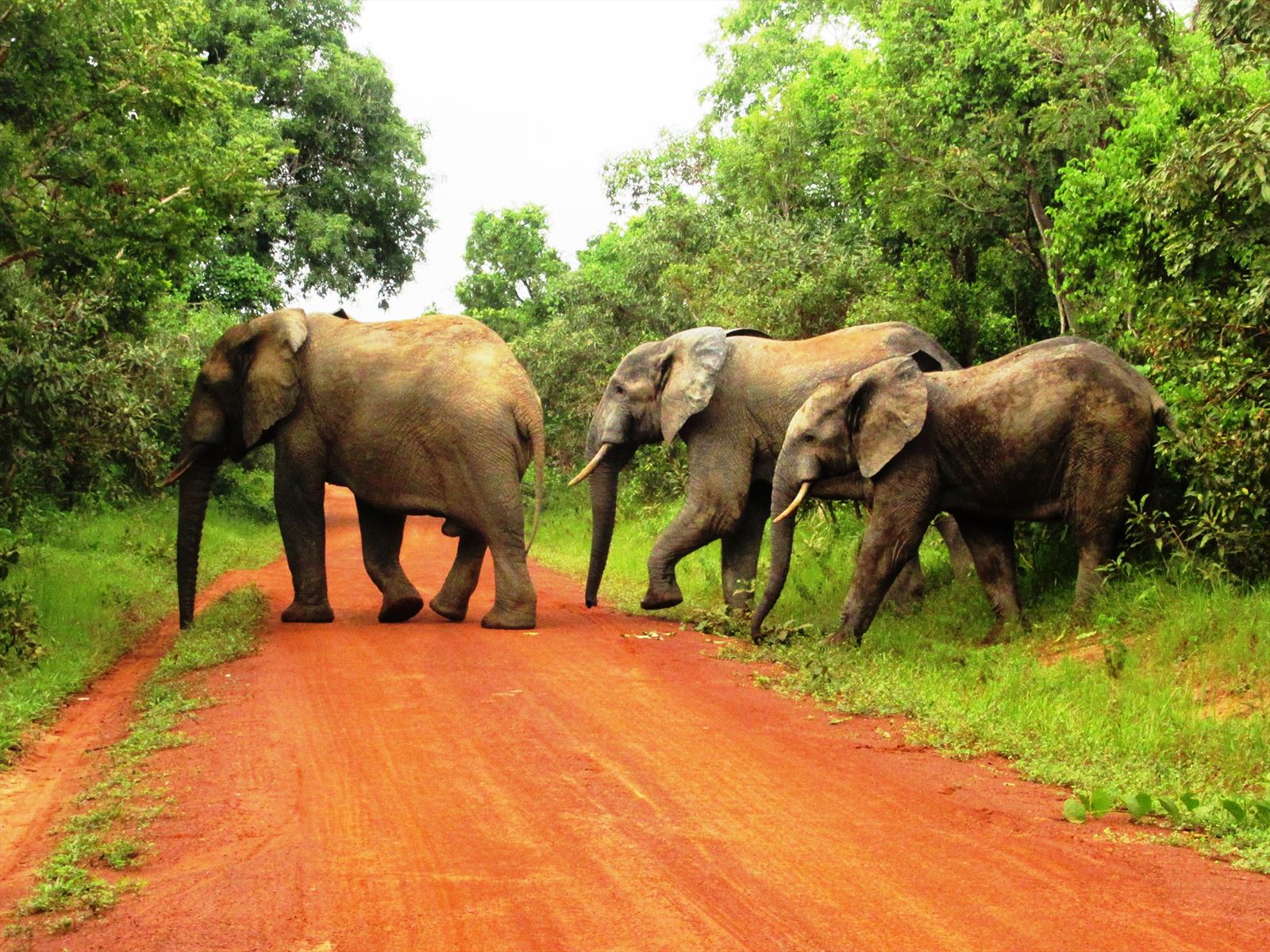
West Africa’s safari infrastructure has matured considerably in the last decade. Mole is the clearest proof of that. It is a park that gives you elephants, kob, waterbuck, roan antelope, and over 300 bird species without the vehicle congestion that plagues the more famous parks during peak season.
Palace Travel, founded in 1991, delivers its West Africa programs through Continent Tours, our destination management company (DMC) in West Africa, with ground operations in Accra staffed by Ghanaian naturalists, licensed guides, and logistics specialists. When we say we know Mole, we mean we know which ranger tracks the oldest bull elephant in the north sector. We know when the boreholes dry up and where the herds move in response.
That kind of knowledge is the difference between a good safari and an unforgettable one.
Mole National Park Safari vs. East Africa: An Honest Comparison
Palace Travel books both. Here is what you actually need to know before you decide:
Takeaway: A Mole National Park safari is not a consolation prize for travelers who can’t afford East Africa. It is a genuinely different and, in several ways, better experience for travelers who value intimacy over spectacle.
Compare your Mole safari options with a specialist
5 Insider Secrets for Your 2026 Mole National Park Safari
Secret 1: The Walking Safari Advantage
Mole is one of the very few national parks in Africa where you can track elephants on foot. Most parks restrict visitors to vehicles for safety reasons. At Mole, armed Ghana Wildlife Division rangers take small groups out at dawn for guided walks directly into elephant territory.
The experience is fundamentally different from anything you get in a Land Cruiser. The ground is dry, cracked, and powdery red in the dry season. The air is hot, dusty, and smells of dried grass and animals. You hear the elephants before you see them; a slow, deep rumble that you feel through the soles of your boots.
Groups are capped at ten people. The ranger reads the wind, the track, and the broken branches. When you’re 15 meters from an elephant that doesn’t know you’re there, you understand why this experience has no comparison.
Secret 2: Timing Is Everything: When to Visit for the Best Elephant Sightings
The dry season runs from November through March. This is when a Mole National Park safari becomes its most dramatic. The vegetation thins out, the watering holes shrink, and the elephants, sometimes in herds of 20 to 40 animals, concentrate around the few remaining water sources.
The prime window is December through February. Temperatures range from a low of around 26°C (79°F) to a high of around 40°C (104°F) during the day, dropping sharply at night, making walking safaris and long afternoon game drives comfortable.
The wet season (May through October) turns the park lush and green. Animal density spreads, making sightings less predictable. But birding surges, migratory species arrive from the Sahel, and the park’s 300+ recorded species become the primary attraction. Plan for a longer stay if visiting in the wet season.
Secret 3: The Zaina Lodge View: West Africa’s Most Cinematic Safari Stay
Zaina Lodge sits on a cliff edge overlooking one of Mole’s main watering holes. The infinity pool faces the valley. The elephants come to drink at predictable hours in the dry season, typically between 5:30 and 7:00 AM, and again in the late afternoon.
You can be in the pool, watching a herd of 30 elephants bathing 200 meters below you, while a red-throated bee-eater perches on the railing beside you. Our clients photograph this exact scene repeatedly.
Zaina’s 24 luxury tented chalets are spacious and quiet. Meals are prepared fresh, heavy on local ingredients: yam, guinea fowl, groundnut stew. The lodge operates sustainably and employs exclusively from surrounding Dagomba and Gonja communities.
Palace Travel tip: Book Zaina Lodge a minimum of three months in advance for December and January dates. It sells out every year.
Request your custom Mole National Park safari plan
Secret 4: Beyond the Elephants: What Else Lives in Mole?
Elephants are the headline attraction on any Mole National Park safari. But Mole’s ecosystem is far wider. The park holds significant populations of:
- Kob, western hartebeest, waterbuck, and roan antelope
- Olive baboons in troops of 30 to 60, visible daily near the lodge perimeter
- Patas monkeys, the fastest primates on land, capable of 55 km/h, regularly spotted on the eastern grasslands.
- The violet turaco: glossy violet plumage, crimson wing flashes, yellow-and-red bill, common in riparian corridors near the watering holes
- Abyssinian rollers, standard-winged nightjars, and white-throated bee-eaters
The park’s birdlife is exceptional and overlooked by non-birders. Serious birders plan entire trips around this list.
Secret 5: The Larabanga Connection: The Oldest Mosque in Ghana
Three to four kilometers from Mole’s main gate sits the Larabanga Mosque. Built in the Sudanese-Sahelian architectural style, it dates to the 15th century, making it the oldest mosque in Ghana and one of the oldest in West Africa. Its whitewashed mud-brick walls, conical towers, and wooden support beams give it the look of something that grew from the earth rather than being built on it.
The town of Larabanga is small and quiet. The mosque is still active. Visitors are welcome outside prayer times, and the community’s elders have maintained a tradition of guided access for heritage travelers for decades.
Also nearby: the Mystic Stone of Larabanga, a large rock embedded at the village entrance that local oral history connects to the founding of the mosque and the spread of Islam across the northern territories.
A Mole National Park safari without a Larabanga visit is an incomplete itinerary. We build it in by default.
How Do You Get to Mole National Park in 2026?
Getting to Mole requires a bit of planning. It’s not a difficult journey, but it has steps.
Option 1: Fly Accra to Tamale
Africa World Airlines and Passion Air both operate daily flights between Accra International Airport (ACC) and Tamale International Airport (TML). Flight time is approximately 1 hour to 1 hour 20 minutes. From Tamale, the drive to Mole is 2.5 to 3 hours on a paved road. Palace Travel arranges private airport transfers from Tamale to the park as part of all Mole packages.
Option 2: Overland from Accra
The overland route from Accra to Mole runs approximately 12 to 13 hours. For clients combining a Mole National Park safari with an Accra heritage visit, we occasionally design this as a two-day overland routing via Kumasi and Techiman, allowing stops at the Ashanti cultural circuit. This is a commitment. It is also an extraordinary one.
Do You Need a Visa for Ghana?
Citizens of most nationalities require a visa to enter Ghana. U.S., UK, and Canadian passport holders apply online through the Ghana Immigration Service portal.
Palace Travel Pro Tip: Expedited Visa Service for Ghana
Standard Ghana visa processing runs 15 business days. Palace Travel’s Expedited Visa Service, processed through Continent Tours’ Accra office, fast-tracks documentation to 48 to 72 hours in most cases. This is especially useful for clients building a West Africa multi-stop itinerary that pairs a Mole safari with heritage time in Accra, Cape Coast, or a connection to Senegal.
Contact our West Africa Visa Desk before you book your flights.
Yellow fever vaccination is mandatory for entry. Be sure to carry your vaccination certificate when traveling.
Get your complete Ghana safari itinerary
How Does a Mole National Park Safari Fit into a Broader Africa Strategy?
Palace Travel operates across the continent. We book Botswana’s Okavango Delta, Tanzania’s Ngorongoro Crater, Rwanda’s Volcanoes National Park, and South Africa’s Kruger National Park. We know what world-class looks like across the full range.
A Mole National Park safari doesn’t compete with those destinations on volume or species diversity. It competes on intimacy, value, and quality of encounter. You will rarely see a lion at Mole, but you will see an elephant at 15 meters on foot in terrain that has barely changed in 10,000 years.
A typical 10-day Ghana itinerary: Accra (2 nights) + Cape Coast heritage day (1 night) + Kumasi (1 night) + Tamale and Mole National Park safari (2 nights) + return to Kumasi (2 nights) + Accra departure (1 night). Add Larabanga on the Mole departure morning. That’s a complete trip.
For the full continental experience, explore our multi-country West Africa itineraries or read our Ghana tours and itineraries guide for complete routing options. See also the Continent Tours West Africa blog for destination guides, packing lists, and seasonal advice from our team on the ground.
Frequently Asked Questions
Your Mole National Park Safari Starts Here
West Africa’s greatest safari is waiting. Our team on the ground in Accra is ready to build your itinerary.
Get Your Custom Mole Safari Itinerary | Speak with a West Africa Specialist